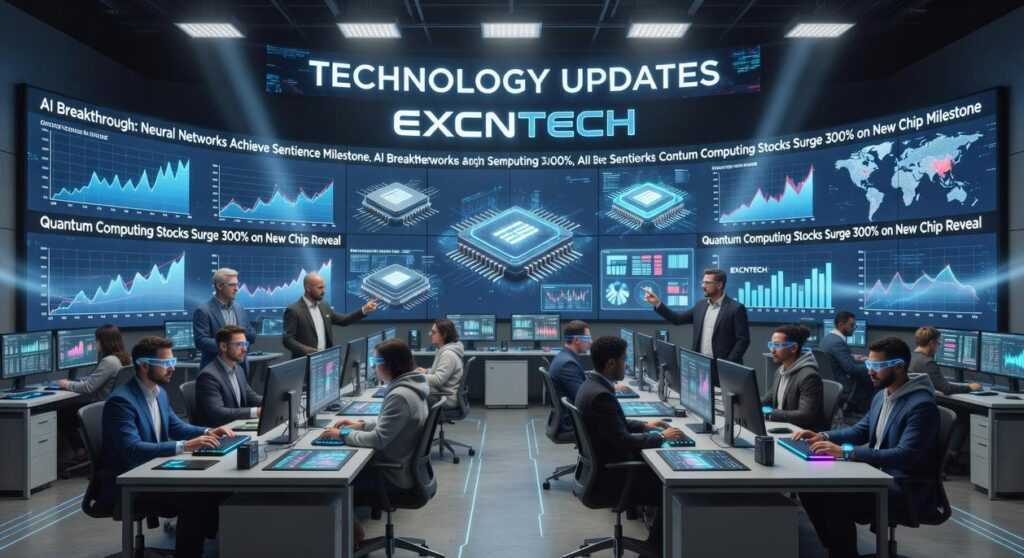
I can’t keep up with tech anymore. And I know you can’t either.
Every week brings another breakthrough that’s supposed to change everything. AI models that write code. Quantum computers solving impossible problems. Chips that think like brains.
Most of it is noise. But some of it actually matters.
I’ve spent years separating real advancements from marketing hype. The stuff that changes how we work from the stuff that just sounds cool in a press release.
This guide focuses on the foundational shifts that will affect your work and your life. Not every new gadget or app. The core technology updates that professionals need to understand.
I analyze these shifts by looking at what’s actually being built, not what’s being announced. What developers are adopting. What companies are betting real money on.
You’ll walk away knowing which tech trends deserve your attention right now. And you’ll get a simple framework for staying informed without drowning in updates.
No hype. No predictions about flying cars. Just what’s happening in tech that you actually need to know about.
Trend 1: The AI and Machine Learning Leap
AI funding hit $50 billion in 2023 alone, according to CB Insights. But here’s what most investors miss.
The real money isn’t going where you think.
Everyone’s talking about ChatGPT and the big language models. Sure, that’s where the headlines are. But the funding patterns tell a different story.
Think of it like this. General AI models are like a Swiss… actually, forget that comparison. Here’s what’s really happening.
You know how a master chef’s knife works better than an all-in-one kitchen gadget? That’s what’s happening with AI right now. Smaller, specialized models are pulling in serious capital because they actually solve specific problems.
I’m seeing huge funding rounds for companies building AI that reads medical scans or catches financial fraud. These aren’t sexy. But they work.
And they’re profitable.
The edge computing shift is even more interesting. Instead of sending data to the cloud and back, AI runs right on your phone or car or factory sensor. It’s faster. More private. And investors are pouring money into it.
Some people argue this is just hype repackaged. They say we’ve seen this before with blockchain and other tech bubbles.
Fair point.
But the difference? These AI applications are already generating revenue. Real companies are cutting costs and improving outcomes today, not in some theoretical future.
I track technology updates excntech regularly, and the pattern is clear. Funding is moving from general AI platforms to specific use cases.
What this means for you:
Start small. Pick one AI tool related to your industry and actually use it for a month. Not to invest yet, but to understand what it can and can’t do.
(I learned more about AI capabilities in two weeks of hands-on testing than in six months of reading articles.)
The companies getting funded right now aren’t building everything for everyone. They’re building one thing really well for a specific market.
That’s where the smart money is going.
Trend 2: Advanced Computing Protocols Redefining ‘Possible’
Remember when Tony Stark built that arc reactor in a cave with a box of scraps?
That’s kind of where we are with quantum computing right now. Except instead of scraps, we’re working with qubits.
Here’s the difference. Your regular computer uses bits. They’re either a 1 or a 0. On or off. Simple.
Qubits? They can be both at the same time. I know that sounds like science fiction but it’s real. And it means quantum computers can process certain problems that would take classical computers thousands of years to solve.
We’re talking about drug discovery that happens in months instead of decades. Materials science breakthroughs that could change how we build everything from batteries to buildings.
But here’s what most people miss.
While everyone’s watching quantum computing, edge computing is already changing how we live. And you probably don’t even realize it.
Think about it. Your phone processes your face to unlock itself. Your car makes split-second decisions to avoid accidents. Your smart home responds before you finish asking.
That’s edge computing. Processing data right where it happens instead of sending it to some server farm hundreds of miles away.
For things like autonomous vehicles or augmented reality, waiting for the cloud isn’t an option. You need answers in milliseconds. Not seconds.
Some tech folks will tell you edge computing is going to replace the cloud entirely. That we’re moving away from centralized processing.
They’re wrong.
Edge and cloud work together. Edge handles the immediate stuff. The cloud takes care of the heavy analysis and long-term storage. According to excntech, this partnership is what makes real-time applications actually work.
You need both.
Trend 3: The Next Generation of Connectivity and Devices
You’ve probably heard the 5G hype.
Faster Netflix streams. Quicker Instagram uploads. The usual stuff.
But that’s not why I care about 5G. And honestly, it’s not why you should either.
Here’s what actually matters.
5G enables a world where millions of devices talk to each other with almost zero delay. We’re talking milliseconds. That changes everything about how technology updates excntech and shapes the infrastructure around us.
Think about it. Your phone is just one device. But what happens when your city has 10,000 sensors monitoring traffic flow in real time? Or when a factory floor has hundreds of machines predicting their own maintenance needs before they break down?
That’s the real shift.
IoT isn’t about smart refrigerators anymore (though those exist). It’s moved into critical systems. I’m seeing it power precision agriculture where farmers know exactly which plants need water. Smart cities that actually reduce traffic congestion. Manufacturing plants that catch problems before production stops.
What’s in it for you? If you invest in companies building this infrastructure, you’re betting on something that’s already happening. Not some future promise.
And the devices themselves keep getting better. Battery tech means sensors can run for years without charging. Custom chips make everything faster and cheaper. New displays bend and fold in ways we couldn’t imagine five years ago.
The connectivity backbone is here. The devices are ready. Now it’s about who builds the systems that tie it all together.
Your Playbook: Essential Strategies for Staying Informed
Most people consume tech news like it’s a buffet.
They scroll through everything. Read nothing deeply. And wonder why they can’t keep up.
I’m going to be blunt. That approach doesn’t work anymore.
The volume of technology updates excntech covers has exploded. You can’t read everything. You shouldn’t try.
Curate, Don’t Consume
Here’s what I do instead.
I build feeds that matter. I skip the generic tech sites that rehash press releases. Instead, I follow specialized newsletters from people who actually build things. I check arXiv for academic papers before they hit mainstream news. I read developer blogs from engineers solving real problems.
You might think this sounds limiting. That you’ll miss important stuff.
But the opposite happens. When you cut the noise, you actually understand what matters. You see patterns others miss because you’re not drowning in surface-level takes.
Go Deep in One Area
I call this the T-shaped approach.
Pick ONE thing to really know. Maybe it’s decoding software development excntech. Maybe it’s machine learning. Maybe it’s network architecture.
Go deep there. Read the documentation. Understand the fundamentals. Know it better than most people in the room.
Then stay broadly aware of everything else. You don’t need to be an expert in blockchain AND quantum computing AND edge computing. You just need to know enough to connect dots.
Actually Use the Technology
Reading about new tech doesn’t teach you much.
Using it does.
When a new API launches, I don’t bookmark an article about it. I spin up a small project. Even if it’s stupid. Even if nobody sees it.
That’s how you learn what actually works versus what sounds good in a blog post.
Turn Problems Into Learning
Your laptop won’t connect to WiFi. Your code throws an error you’ve never seen. Your phone app keeps crashing.
Most people get frustrated and look for the fastest fix.
I get it. You want things to work.
But here’s what I’ve learned. Those moments teach you MORE than any tutorial. When you troubleshoot, you see how systems actually connect. You learn what breaks and why.
Next time something goes wrong, don’t just Google the solution and move on. Dig into WHY it happened.
That’s how you build real understanding.
From Information Overload to Strategic Insight
You don’t need to know everything about tech.
You just need to understand the pillars: AI, advanced computing, and connectivity. These are the foundations that everything else builds on.
Feeling overwhelmed by tech news is normal. I see it all the time. The volume of information coming at you every day can feel impossible to manage.
But it’s not.
When you focus on core concepts instead of chasing every headline, things start to make sense. You begin to see patterns. You understand why certain developments matter and others are just noise.
That’s how you stay ahead without burning out.
Here’s what I want you to do: Pick one trend from this article. Just one. Spend 30 minutes this week exploring a specialized source about it. Read an article. Watch a video. Listen to a podcast.
That’s your starting point.
technology updates excntech exists because strategic learning beats information overload every time. You now have a framework that works.
The tech world keeps moving. Your next step is to move with it, one focused session at a time. Homepage.