
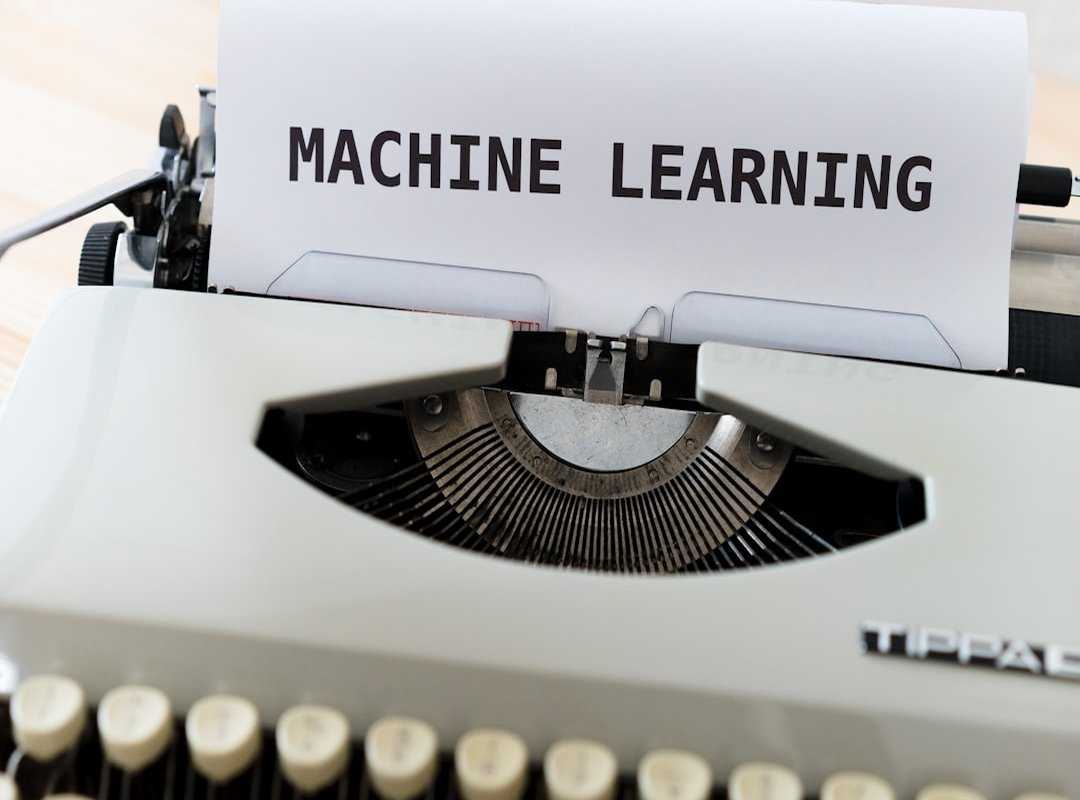
Feeling like you’re falling behind in the fast-paced world of AI? You’re not alone. It’s tough to keep up with the latest trends and techniques, especially with everyone shouting about the next big thing.
But let’s cut through the noise. This guide focuses on the important techniques for machine learning algorithms 2024. Real-world results, not just theory.
That’s what we’re about here.
You might be wondering, why should I trust this guide? Because it’s based on practical applications and emerging tech strategies. We’ve been tracking what’s actually working, not just what’s being talked about.
You’ll learn not just what these techniques are, but why they matter and how to apply them. Ready to solve those complex business problems? You’re in the right place.
2024’s New Modeling Game: Adapt or Get Left Behind
Remember when the old ways of modeling were enough? Well, not anymore. The sheer scale and complexity of data today demand a fresh approach.
Models in 2024 must tackle unstructured data like never before. It’s not just about crunching numbers; it’s about recognizing detailed patterns too complex for yesterday’s tools.
Generative AI and LLMs have shifted the space. These technologies have set new expectations. Now, we crave takeaways that feel more sophisticated and human-like.
This isn’t just a tech upgrade; it’s a total game-changer. You can’t ignore it. If you’re not on board, you’re behind.
And here’s the kicker: Responsible AI is now a must. It’s not just about accuracy. Models need to be fair, transparent, and explainable.
Businesses and regulators don’t see this as optional anymore. It’s now a core requirement.
Speaking of advancements, Automating Customer Service Ai Chatbots is a prime example of how AI is reshaping industries. As we move forward, machine learning algorithms 2024 will define success. Adapt or face the consequences.
The future demands it, and you can’t afford to miss the boat.
Beyond ‘What’ to ‘Why’: Causal AI and Explainable AI (XAI)
Ever wonder if your marketing efforts are truly paying off? Causal AI steps in. It’s not just about seeing sales go up when you run an ad. It’s about understanding how much of that bump is actually due to the ad.
This difference is key. In 2024, knowing causation can supercharge strategic decisions. Imagine optimizing budgets with confidence or pinpointing what market interventions really work.
Now, let’s talk about Explainable AI (XAI). It’s the tool that cracks open the ‘black box’ of AI. Think of it like a mechanic who tells you why your car’s acting up, instead of just saying, “It’s broken.” XAI is about transparency.
It helps build trust with non-tech folks, who often just want to understand what’s going on. Plus, it makes debugging models way easier. Not to mention, it keeps you in line with regulations.
Getting started with XAI? Dive into open-source libraries like DoWhy for causality. Or use built-in model interpretation tools like SHAP to see which features matter most.
These tools are a game-changer.
Machine learning algorithms 2024? They’re evolving fast. For a deeper dive, check out this breakdown.
It’s a handy guide to what’s out there.
Pro tip: Don’t just rely on the outputs. Question them. Understand them. the real power lies.
And if you’re feeling overwhelmed, remember: even the best AI is only as good as the understanding behind it. Want results? Start asking “why.”
Ensembles & AutoML: The Changing Duo
Ever heard of the “wisdom of the crowd”? Well, that’s exactly what advanced ensemble methods like XGBoost and LightGBM are all about. By combining multiple “good” models, they create one “great” model.

It’s like gathering a room full of clever people, each with their own perspective, to solve a problem. In 2024, these machine learning algorithms reign supreme for structured data. And why is that?
Because structured data is the lifeblood of businesses needing takeaways for sales forecasting and customer churn prediction.
Now, let’s talk AutoML. Picture it: a “robot assistant” for your data science team. It handles the boring stuff, like hyperparameter tuning.
This means your team can test more hypotheses and focus on strategic analysis. Who wouldn’t want that? It speeds up the journey from data to insight.
But don’t just take my word for it. If you’re curious, try experimenting with cloud-based AutoML services like Google Vertex AI or Azure ML. They’re a great way to dip your toes into the waters of automation.
Or, if you’re more of a DIY person, solid open-source libraries like FLAML or Auto-sklearn are worth a shot.
AutoML and ensembles are transforming how we approach predictive analytics transforming decision making. They’re not just buzzwords; they’re tools that provide real value. It’s like hiring a team of experts without the overhead.
Pro tip: Keep an eye on how these methods evolve. They are shaping the future of machine learning. By leveraging these tools, you’re not just keeping up.
You’re setting the pace. Machine learning algorithms 2024 are not just for tech giants anymore. They’re for everyone ready to take the plunge.
The Future is Connected: Graph Neural Networks Explained
Let’s talk Graph Neural Networks (GNNs). They’re not your typical spreadsheet-style data models. GNNs are all about understanding relationships and connections.
Imagine how a social media site knows who your friends are, then suggests new ones based on those connections. GNNs do something similar, but for messy, complex business data. Cool, right?
Now, what makes GNNs stand out in 2024? Well, for one, they can spot sophisticated fraud rings. They analyze networks of suspicious transactions.
It’s like having a detective with a PhD in network theory. Another use case? Optimizing supply chains.
GNNs model dependencies between suppliers, making the flow of goods smoother. Thirdly, GNNs create hyper-personalized recommendation engines. They dig into user behavior and suggest what you’d love before you even know it.
So why aren’t more businesses using GNNs? The challenge is in the setup. You need a well-defined problem to tackle.
Don’t just jump in thinking you’ll solve everything at once. Start small. Use libraries like PyTorch Geometric or the Deep Graph Library (DGL) to get your feet wet.
For businesses with highly connected datasets, GNNs are a competitive differentiator. They reveal patterns invisible to other techniques. And in the world of machine learning algorithms 2024, that’s gold.
But really, who wouldn’t want that edge?
Does this mean GNNs are the answer to every problem? No, definitely not. But they’re a solid tool for the right scenarios.
Just don’t expect miracles without the right data (and) patience. Seriously, patience is key.
So, are you ready to explore this world of connections? Let’s get started.
Take the Leap into AI Mastery
You’ve done it. You dug into the heart of modern techniques and emerged with a clear view. We’re not just talking predictions anymore.
It’s about understanding, efficiency, and connection. The fear of being left in AI’s dust? Shake it off.
This new playbook nails today’s data needs with trust front and center.
Now, let’s talk guts. The world isn’t slowing down for anyone. Pick one of those machine learning algorithms 2024 that lights your fire.
Experiment. Dive in. That’s your ticket to staying ahead, to future-proofing your skill set.
Don’t wait for the next big wave of innovation to pass you by. Start now. Build your confidence and lead with insight.
Ready to dive deeper? Visit excntech.com for your next steps.
 There is a specific skill involved in explaining something clearly — one that is completely separate from actually knowing the subject. Christopher Braggshover has both. They has spent years working with innovation alerts in a hands-on capacity, and an equal amount of time figuring out how to translate that experience into writing that people with different backgrounds can actually absorb and use.
Christopher tends to approach complex subjects — Innovation Alerts, Essential Tech Strategies, Device Troubleshooting Solutions being good examples — by starting with what the reader already knows, then building outward from there rather than dropping them in the deep end. It sounds like a small thing. In practice it makes a significant difference in whether someone finishes the article or abandons it halfway through. They is also good at knowing when to stop — a surprisingly underrated skill. Some writers bury useful information under so many caveats and qualifications that the point disappears. Christopher knows where the point is and gets there without too many detours.
The practical effect of all this is that people who read Christopher's work tend to come away actually capable of doing something with it. Not just vaguely informed — actually capable. For a writer working in innovation alerts, that is probably the best possible outcome, and it's the standard Christopher holds they's own work to.
There is a specific skill involved in explaining something clearly — one that is completely separate from actually knowing the subject. Christopher Braggshover has both. They has spent years working with innovation alerts in a hands-on capacity, and an equal amount of time figuring out how to translate that experience into writing that people with different backgrounds can actually absorb and use.
Christopher tends to approach complex subjects — Innovation Alerts, Essential Tech Strategies, Device Troubleshooting Solutions being good examples — by starting with what the reader already knows, then building outward from there rather than dropping them in the deep end. It sounds like a small thing. In practice it makes a significant difference in whether someone finishes the article or abandons it halfway through. They is also good at knowing when to stop — a surprisingly underrated skill. Some writers bury useful information under so many caveats and qualifications that the point disappears. Christopher knows where the point is and gets there without too many detours.
The practical effect of all this is that people who read Christopher's work tend to come away actually capable of doing something with it. Not just vaguely informed — actually capable. For a writer working in innovation alerts, that is probably the best possible outcome, and it's the standard Christopher holds they's own work to.