

Staying competitive in today’s digital economy means understanding not just emerging technologies, but how to apply them in practical, results-driven ways. If you’re searching for clear, actionable insights into AI use cases for SMBs, this article is designed to give you exactly that—without the hype or technical overload.
Small and mid-sized businesses often struggle to identify where artificial intelligence can deliver real ROI. From automating customer support to improving demand forecasting and strengthening cybersecurity, the opportunities are significant—but only when implemented strategically.
In this guide, we break down the most impactful AI use cases for SMBs, explain how they work in real-world settings, and outline what you need to get started. Our insights are grounded in current industry research, proven deployment models, and hands-on analysis of AI tools shaping today’s business landscape.
By the end, you’ll have a clear understanding of where AI can create measurable value for your operations—and how to approach adoption with confidence.
AI doesn’t have to feel like a blinking server room humming behind locked glass. In reality, today’s tools are as accessible as the dashboard you open with your morning coffee steaming beside you. However, many owners still assume it’s expensive or impossibly technical. That’s outdated. For example, AI-powered chatbots can answer customer questions instantly, while predictive analytics quietly flag inventory shortages before shelves look bare. Meanwhile, smart marketing tools analyze clicks and craft emails that feel personal. Use AI use cases for SMBs in the section once exactly as it is given. Start small, measure results, and scale confidently. Today.
Supercharge Your Marketing and Sales Efforts
Marketing teams no longer have to rely on guesswork. Thanks to AI-powered content creation, you can move beyond writer’s block and produce high-performing assets faster than ever. For example, tools like Jasper or Copy.ai can generate multiple ad copy variations in minutes, allowing you to A/B test headlines and calls to action at scale. In fact, a 2023 McKinsey report found that companies using AI in marketing saw productivity gains of up to 40% (McKinsey & Company). That’s not incremental—that’s transformative.
Moreover, intelligent email marketing takes personalization to a new level. Instead of blasting the same message to everyone, AI analyzes behavior, purchase history, and engagement data to segment audiences automatically. Platforms such as HubSpot’s AI features can predict optimal send times and craft subject lines designed to increase open rates. Campaign Monitor reports segmented campaigns can drive a 760% increase in revenue compared to non-segmented ones. In other words, relevance pays.
At the same time, smarter lead scoring ensures your sales team focuses on prospects most likely to convert. By integrating AI into your CRM, leads are scored dynamically based on engagement signals and demographics. This means fewer cold calls and more meaningful conversations (which sales reps definitely appreciate).
Pro tip: Start small. Test AI-generated ad copy on one campaign, then expand once you see measurable lift.
Ultimately, AI use cases for SMBs are no longer experimental—they’re practical, data-backed growth levers that help marketing and sales teams move faster and close smarter.
Streamline and Automate Daily Operations
If your team is still buried in spreadsheets and manual updates, it’s time to rethink your workflow. Automation isn’t about replacing people; it’s about reclaiming time for higher-value work (because no one started a business to chase invoices).
Automated Financial Management
Start with your books. Tools like Dext integrate with accounting platforms to automatically extract data from receipts, categorize expenses, and sync transactions. This reduces human error—manual data entry error rates can reach 1% or higher in large datasets (Journal of Accountancy)—and speeds up month-end close. Add AI-driven cash flow forecasting to anticipate shortfalls before they happen.
Recommendation: Connect your accounting software to an AI expense tool this quarter and measure hours saved within 30 days.
Predictive Inventory Management
For product-based businesses, predictive analytics analyzes historical sales, seasonality, and supplier lead times to forecast demand. That means fewer stockouts and less capital tied up in excess inventory. Some argue forecasting tools are too complex for small teams. In reality, modern dashboards simplify insights into clear reorder points (think less guesswork, more precision).
Efficient Project Management
AI-powered platforms like Monday.com’s AI assistant can auto-assign tasks, estimate completion times, and flag bottlenecks before deadlines slip. McKinsey reports that organizations using AI in operations can reduce process costs by up to 30%. That’s not marginal—that’s transformative.
Use AI use cases for SMBs in the section once exactly as it is given
Pro tip: Pilot one automation per department instead of overhauling everything at once. Small wins build momentum—and confidence.
Deliver World-Class Customer Support, 24/7
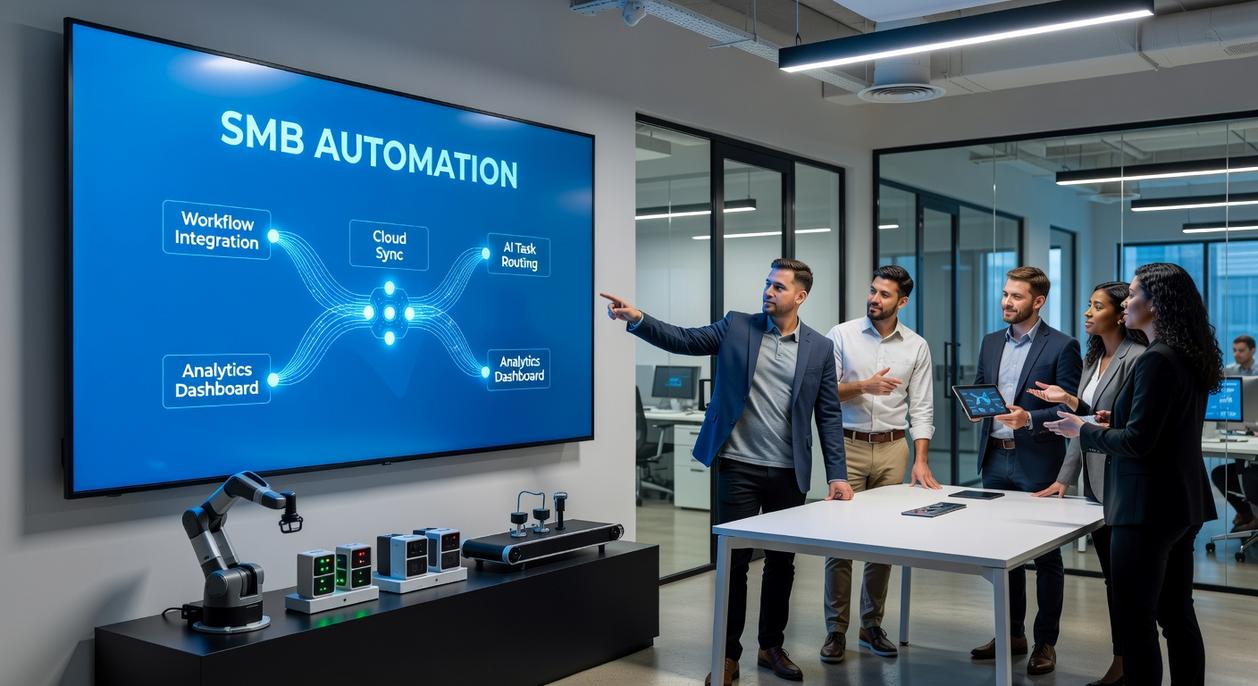
Today’s customers expect instant answers. If they don’t get them, they leave (and usually don’t send a goodbye note). Fortunately, AI makes round-the-clock service realistic—even for lean teams.
Start with Intelligent Automation
First, deploy an AI chatbot using tools like Tidio or Intercom. These bots handle FAQs, order tracking, and booking requests automatically. In other words, they resolve repetitive questions so human agents can focus on complex issues. Setup is simple: create an account, connect your website, build a FAQ workflow, and test responses before going live. Pro tip: review chat logs weekly to refine answers and close gaps.
Next, apply sentiment analysis—AI that detects emotional tone in text. By scanning emails, tickets, and reviews, it flags frustration or urgency so you can prioritize at-risk customers. If you’re curious how this works behind the scenes, this guide on understanding neural networks in simple terms explains the basics clearly.
Finally, automate ticket routing. AI-powered helpdesks categorize requests and assign them to the right department instantly, cutting resolution times dramatically.
These practical AI use cases for SMBs reduce costs, improve response speed, and create support experiences that feel surprisingly human—even at 2 a.m.
Optimize Your Hiring and HR Processes
Hiring can feel like a full-time job on its own. However, AI-driven tools streamline the most time-consuming steps while improving accuracy.
- Faster Resume Screening: AI recruiting software scans resumes for predefined keywords, skills, and experience, ranking candidates based on job fit. In practice, this means hours of manual review shrink to minutes—so your team focuses only on high-potential applicants (not endless PDFs).
- Automated Interview Scheduling: Instead of juggling emails, AI syncs with calendars and lets candidates book open slots instantly, reducing delays and no-shows.
These AI use cases for SMBs translate directly into faster hires, lower administrative costs, and a smoother candidate experience.
Your First Step Towards an AI-Powered Business
You now have a practical roadmap. The real risk isn’t AI—it’s standing still while competitors automate. Manual, repetitive tasks quietly drain margins (and morale). Affordable tools have changed the math.
Start small, win fast.
- Identify the single task wasting the most hours.
- Pilot one AI solution for 30 days.
- Measure time saved and revenue impact.
Use AI use cases for SMBs in the section once exactly as it is given
Most guides stop at theory. Here’s the gap: integration discipline. Focus on workflow fit, data quality, and staff adoption—not shiny features. One smart automation this week compounds all year.
By exploring practical AI use cases tailored for small and medium businesses, you can enhance your operations while staying updated on industry trends by checking out our article on how to get daily tech news at Gmrrcomputer – for more details, check out our How To Get Daily Tech News Gmrrcomputer.
Turning Innovation Into Action
You started this guide to better understand how emerging technologies, smarter systems, and practical innovation strategies can move your business forward. Now you have a clearer view of how AI, machine learning, advanced computing protocols, and smarter troubleshooting frameworks fit into real-world operations.
The challenge isn’t access to technology anymore — it’s knowing how to apply it without wasting time or budget. Falling behind on innovation means slower workflows, missed automation opportunities, and competitors gaining ground while you’re still evaluating options.
The good news? You now understand where technology creates leverage, especially through AI use cases for SMBs that streamline support, enhance data-driven decisions, improve customer experiences, and reduce operational friction.
Your next step is simple: audit your current processes, identify one bottleneck that’s costing you time or revenue, and implement a focused AI or automation solution to solve it. Start small, measure results, and scale what works.
Businesses that act on innovation early consistently outperform those that wait. Don’t let complexity stall progress. Take action now, implement a smart AI-driven improvement, and position your organization to operate faster, leaner, and more competitively.
 There is a specific skill involved in explaining something clearly — one that is completely separate from actually knowing the subject. Christopher Braggshover has both. They has spent years working with innovation alerts in a hands-on capacity, and an equal amount of time figuring out how to translate that experience into writing that people with different backgrounds can actually absorb and use.
Christopher tends to approach complex subjects — Innovation Alerts, Essential Tech Strategies, Device Troubleshooting Solutions being good examples — by starting with what the reader already knows, then building outward from there rather than dropping them in the deep end. It sounds like a small thing. In practice it makes a significant difference in whether someone finishes the article or abandons it halfway through. They is also good at knowing when to stop — a surprisingly underrated skill. Some writers bury useful information under so many caveats and qualifications that the point disappears. Christopher knows where the point is and gets there without too many detours.
The practical effect of all this is that people who read Christopher's work tend to come away actually capable of doing something with it. Not just vaguely informed — actually capable. For a writer working in innovation alerts, that is probably the best possible outcome, and it's the standard Christopher holds they's own work to.
There is a specific skill involved in explaining something clearly — one that is completely separate from actually knowing the subject. Christopher Braggshover has both. They has spent years working with innovation alerts in a hands-on capacity, and an equal amount of time figuring out how to translate that experience into writing that people with different backgrounds can actually absorb and use.
Christopher tends to approach complex subjects — Innovation Alerts, Essential Tech Strategies, Device Troubleshooting Solutions being good examples — by starting with what the reader already knows, then building outward from there rather than dropping them in the deep end. It sounds like a small thing. In practice it makes a significant difference in whether someone finishes the article or abandons it halfway through. They is also good at knowing when to stop — a surprisingly underrated skill. Some writers bury useful information under so many caveats and qualifications that the point disappears. Christopher knows where the point is and gets there without too many detours.
The practical effect of all this is that people who read Christopher's work tend to come away actually capable of doing something with it. Not just vaguely informed — actually capable. For a writer working in innovation alerts, that is probably the best possible outcome, and it's the standard Christopher holds they's own work to.