

6.7 inches is equal to 17.018 centimeters. This article will give you the direct answer and show you how to convert any inch measurement to centimeters.
You might be wondering why this conversion is so common. Well, it’s often used in tech gadgets like smartphone screens and product specs.
By the end of this short guide, you’ll know exactly how to do the conversion yourself. And you’ll be able to visualize what 6.7 inches looks like in the real world.
The math is straightforward and easy to remember. Trust me, you won’t need a calculator for this.
The Core Formula: How Inches Convert to Centimeters
Let’s get straight to it. The single most important number for converting inches to centimeters is 2.54. That’s right, 1 inch is officially defined as exactly 2.54 centimeters.
This isn’t just a random number; it’s an international standard. It ensures that measurements are consistent across countries and industries. No more confusion about whether your measurements are off.
The conversion formula is simple: Centimeters = Inches × 2.54.
For example, if you have 6.7 inches, the calculation is straightforward. Just multiply 6.7 by 2.54. So, 6.7 inches × 2.54 = 17.018 cm.
What if you need to go the other way? The reverse formula is just as easy: Inches = Centimeters ÷ 2.54. For instance, 10 cm divided by 2.54 gives you about 3.937 inches.
That’s it. No complex math, no fancy tools. Just this simple multiplication.
Now, you might be wondering, what if I need to convert larger or more complex measurements? Don’t worry, the same formula applies. Just break it down into smaller parts if it helps.
So, next time you need to convert inches to centimeters, remember 2.54. It’s all you need.
What Does 6.7 Inches Look Like? Common Object Comparisons
Visualizing abstract measurements can be tough. Let’s break it down with some real-world examples.
First up, smartphones. Many flagship phones, like the iPhone Pro Max series, have screens that are about 6.7 inches diagonally. That’s a good starting point.
Now, think about a standard US dollar bill. It’s 6.14 inches long. So, 6.7 inches is just over half an inch longer than that.
Easy, right?
How about a large coffee mug? The height of one of those mugs is pretty close to 6.7 inches. If you’ve got a mug nearby, take a look.
Another common object is a standard paperback novel. The width of most paperbacks is around 6.7 inches. Next time you pick one up, you’ll have a better sense of what 6.7 inches looks like. Excntech
For those who prefer metric, 6.7 inches is about 17.018 cm. Imagine a 20 cm ruler. 6.7 inches is just a bit shorter than that.
These comparisons should help you get a better feel for the size. Whether you’re shopping for a new phone or just curious, having these mental reference points can be really handy.
A Practical Guide to Measuring and Converting Yourself
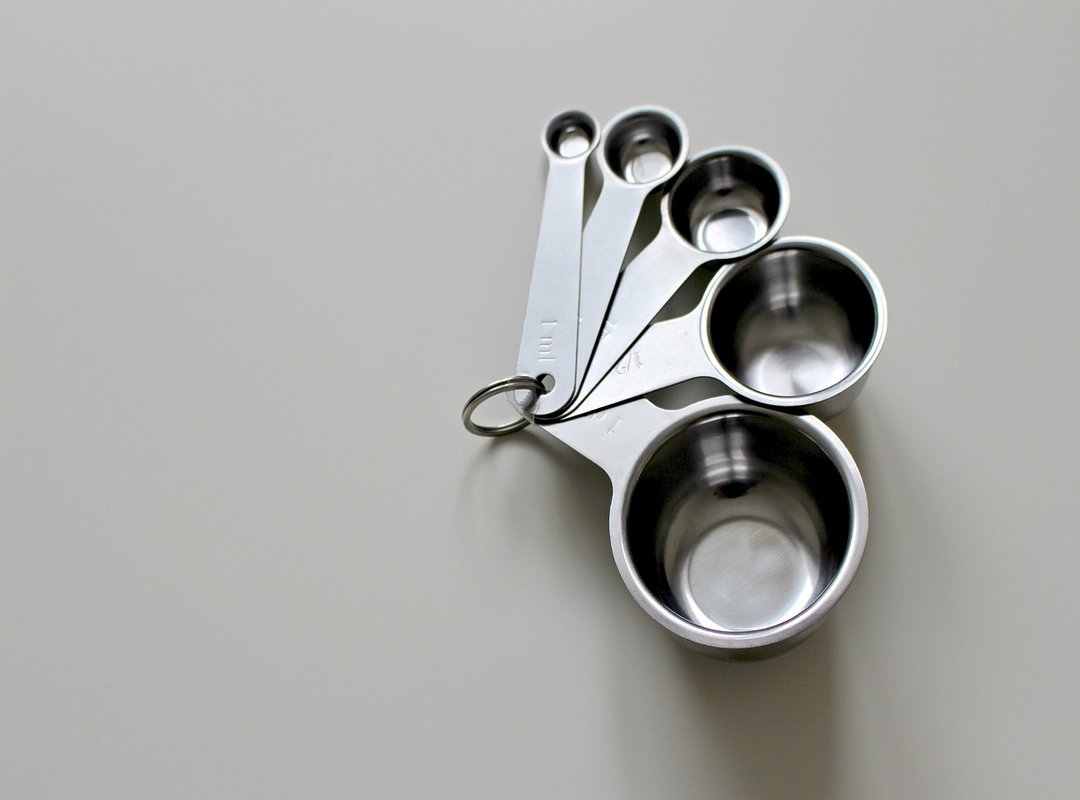
Choosing the right tool is key. Use a standard tape measure or ruler. Make sure you use the ‘inch’ side for your initial measurement.
Measure accurately. Start from the zero mark, not the end of the ruler. This way, you get a precise reading in inches.
Now, apply the conversion formula. Take your measurement in inches and multiply it by 2.54 to get the length in centimeters.
Let’s walk through an example. Say you measure a book to be 8 inches wide. You would calculate 8 × 2.54, which equals 20.32 cm.
Handling fractions can be tricky. Remember, 1/2 inch is 0.5, 1/4 inch is 0.25, and so on. Convert these to decimals before multiplying.
For instance, if you measure something to be 6.7 inches, you’d convert it to 6.7 × 2.54, which equals 17.018 cm.
Simple, right? Now you can measure and convert with confidence.
Common Questions About Inch and Centimeter Conversions
Which countries use inches? Primarily the United States, Liberia, and Myanmar. The rest of the world predominantly uses the metric system (centimeters, meters).
Why is the conversion factor exactly 2.54? This was standardized by international agreement in 1959 to unify measurements in science and trade. Some argue that this conversion factor complicates things, but it’s a necessary standard for global consistency.
Is it more accurate to measure in inches or centimeters? Neither is inherently more accurate. Accuracy depends on the quality of the measuring tool.
However, the metric system is often easier for calculations due to its base-10 nature.
Some people might say that using inches is more intuitive for certain tasks, like carpentry. But for most scientific and engineering applications, the metric system is far more practical.
Here’s a quick reference chart for common conversions:
- 1 inch = 2.54 cm
- 5 inches = 12.7 cm
- 10 inches = 25.4 cm
- 12 inches (1 foot) = 30.48 cm
For example, 6.7 inches in cm is 17.018 cm.
Making Sense of Measurements in a Global World
Converting 6.7 inches in cm is straightforward; simply multiply by 2.54 to get 17.018 cm. Understanding both the imperial and metric systems can greatly enhance your experience with online shopping, DIY projects, and international travel. Embrace this simple conversion formula whenever you come across an inch measurement.
 There is a specific skill involved in explaining something clearly — one that is completely separate from actually knowing the subject. Christopher Braggshover has both. They has spent years working with innovation alerts in a hands-on capacity, and an equal amount of time figuring out how to translate that experience into writing that people with different backgrounds can actually absorb and use.
Christopher tends to approach complex subjects — Innovation Alerts, Essential Tech Strategies, Device Troubleshooting Solutions being good examples — by starting with what the reader already knows, then building outward from there rather than dropping them in the deep end. It sounds like a small thing. In practice it makes a significant difference in whether someone finishes the article or abandons it halfway through. They is also good at knowing when to stop — a surprisingly underrated skill. Some writers bury useful information under so many caveats and qualifications that the point disappears. Christopher knows where the point is and gets there without too many detours.
The practical effect of all this is that people who read Christopher's work tend to come away actually capable of doing something with it. Not just vaguely informed — actually capable. For a writer working in innovation alerts, that is probably the best possible outcome, and it's the standard Christopher holds they's own work to.
There is a specific skill involved in explaining something clearly — one that is completely separate from actually knowing the subject. Christopher Braggshover has both. They has spent years working with innovation alerts in a hands-on capacity, and an equal amount of time figuring out how to translate that experience into writing that people with different backgrounds can actually absorb and use.
Christopher tends to approach complex subjects — Innovation Alerts, Essential Tech Strategies, Device Troubleshooting Solutions being good examples — by starting with what the reader already knows, then building outward from there rather than dropping them in the deep end. It sounds like a small thing. In practice it makes a significant difference in whether someone finishes the article or abandons it halfway through. They is also good at knowing when to stop — a surprisingly underrated skill. Some writers bury useful information under so many caveats and qualifications that the point disappears. Christopher knows where the point is and gets there without too many detours.
The practical effect of all this is that people who read Christopher's work tend to come away actually capable of doing something with it. Not just vaguely informed — actually capable. For a writer working in innovation alerts, that is probably the best possible outcome, and it's the standard Christopher holds they's own work to.